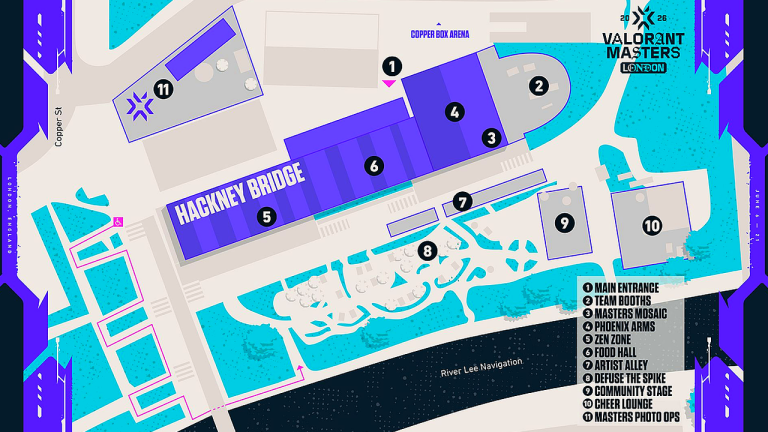
EDward Gaming’s most important London weapon may be patience, because the team can make aggressive opponents play one extra uncomfortable decision.
The competitive frame
Edward gaming’s slow-round control matters because it sits at the point where preparation and nerve finally overlap. Teams have enough information to target each other, but not enough room to absorb a bad start.
The first layer is late rounds. If that area goes wrong, the rest of the plan becomes reactive and the opponent can dictate the tempo.
The second layer is retake timing. London has already shown that comfort alone is not enough when every remaining team can punish a repeated habit.
The important part of EDward Gaming’s slow-round control is the timing: EDward Gaming’s slow-round control lands during the final stretch of Masters London, when every preparation detail becomes public quickly.
Where the series can move
The practical read is direct: teams need to protect utility discipline without becoming predictable.
The cleanest route is built through utility discipline. That is where coaches can still change the series before the scoreboard becomes desperate.
The risk is also visible: overcommitting to retake timing can create openings elsewhere on the map.
The map pool also brings China’s title path into focus. A strong team needs at least one answer away from its preferred look.
The next checkpoint is how China’s title path changes after the first timeout.

For EDward Gaming’s slow-round control, the small moments arrive before the highlight rounds: a saved rifle, a late lurk, a correct rotation call and a disciplined exit all change the next buy phase.
Key details
| Area | Detail |
|---|---|
| Main thread | EDward Gaming’s slow-round control |
| First detail | late rounds |
| Second detail | retake timing |
| Next check | China’s title path |
How the detail changes the next phase
EDward Gaming’s slow-round control now has to be read through execution rather than headline value. Main thread: EDward Gaming’s slow-round control gives the first fixed point, but the real separation comes from how quickly the people involved turn that fixed point into repeatable behaviour.
The second layer is preparation. First detail: late rounds is not a decorative detail because it decides whether the same strength can survive when the opponent or rival changes the conditions.
The third layer is reaction speed. EDward Gaming’s slow-round control lands during the final stretch of Masters London, when every preparation detail becomes public quickly means the next response will be judged immediately, not weeks later, and that makes every early sign more important than usual.
The practical consequence is that teams need to protect utility discipline without becoming predictable. If that happens, the update keeps value even if the next result is not perfect.
The opposite danger is clear as well. overcommitting to retake timing can create openings elsewhere on the map would make the same event look less like progress and more like a short spike that rivals can absorb.

The strongest reading comes from the detail that follows the headline. Second detail: retake timing is where the story becomes important for judging form, preparation and decision-making.
The next visible checkpoint is specific: how China’s title path changes after the first timeout. That is the point where talk turns into evidence and where the earlier performance either travels or fades.
EDward Gaming’s slow-round control also changes the comparison with nearby stories because it gives one more concrete marker for judging who is improving, who is reacting late and who is only carrying momentum from an older result.
The details around EDward Gaming’s slow-round control should be tracked in sequence rather than as separate fragments. First comes the confirmed point, then the immediate tactical response, and then the next public checkpoint where the earlier claim either holds or breaks.
That sequence matters because Next check: China’s title path is not only a date or label. It is the next moment where the same pressure returns with fewer excuses and better information for rivals.
If the response is clean, EDward Gaming’s slow-round control becomes a reference point for the next stage of the season. If the response is messy, the same headline will be remembered as a warning that the first sign was not durable enough.
The final read is therefore practical: teams need to protect utility discipline without becoming predictable. That is the part teams, drivers or players can actually carry into the next session, map or match without relying on emotion.
The pressure point
The pressure around EDward Gaming’s slow-round control is sharper because every opponent now has recent footage. Surprise is harder, so execution has to carry more of the weight.
A team that loses control of economy while chasing utility discipline can spend half a map playing from behind. That is why the early full-buy rounds matter more than the opening score suggests.
What to watch
Watch late rounds in the first six rounds. The first clear pattern will tell which team is reading the match faster.
Watch China’s title path after the first timeout. The adjustment after a pause often reveals the real depth of the preparation.
For more context on our site, this update connects with Masters London Top Four Gives the Bracket a Global Shape and Paper Rex and EDward Gaming Give Masters London a Heavy Upper Final.
EDward Gaming Patience Looks Like a Real Upper Final Weapon is a practical London storyline because the remaining matches are no longer about basic form. They are about who converts preparation into round wins first.