FPS (Frames per Second) - number of frames per second displayed when watching videos and in computer games The magnitude of the indicator directly affects the comfort of the game The high value of the FPS makes the game smoother, shooting games (shooters) are easier to aim, especially when making sharp turns. Low FPS deteriorates the image, delays appear, jerks when turning.
General FPS
The higher the FPS, the easier it is to play, the better graphics possible due to game settings. Although there is another side to the coin, for example, with too high frame rates on powerful computers in older games, the screen may flicker. Therefore, depending on the game and computer configuration, sometimes you have to find balance.
If we talk about modern games such as CS:GO, Valorant and a number of others, then there will be no problem. Games are quite demanding on hardware and even on good computers you have to do optimization.
All actions to increase FPS can be divided into two stages:
- setting up the operating system, its individual components, for example, graphics card parameters;
- setting up graphics inside the game.
The more quality is set, the more noticeable the FPS seeps. Therefore, the main idea that will allow you to increase the FPS to Valorant on a weak computer is to worsen the graphics.
If in Windows the visual deterioration is almost imperceptible and does not affect the usability of the system, then in the game the graphics quality can drop greatly, even to the point of pixels. Despite the increase in frame rate, the game may become even more uncomfortable. Most interface elements simply will not be visible on the screen, and models of players at long distances are weakly legible. Therefore, there is no need to strive for maximum frequency rise. Find a balance in which the FPS will be comfortable, Valorant does not lie, and the picture quality does not strain your eyes.
How much FPS is considered the norm in Valorant
- 0-30 - heavy delays, almost impossible to play;
- 30-60 - this level of FPS can be squeezed out on old computers, but is not suitable for playing online with other people, as other players will have an advantage if their performance is higher;
- 60-100 - for home game the score is sufficient, delays are minimal, but still present, lags can increase in places on the cards where there are many elements or in large areas;
- 100-200 FPS - High performance for very comfortable play This frequency is not maximum Modern computers can provide FPS up to 250-300 frames/sec, which is suitable for professional players.
To ensure a certain level of FPS, the developers wrote the necessary ones on the official website valorant minimum system requirements. We strongly recommend that you review them to understand what performance is, in principle, possible on your PC.
How to raise the FPS
First, we recommend "playing around" with in-game settings. Perhaps by reducing the settings to average, you will already be able to increase the FPS to acceptable values without resorting to interference with the operating system.
Graphics settings in Valorant
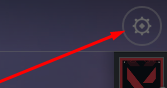
Go to game settings by clicking on the gear icon in the top right corner of the screen.
Next, select Settings
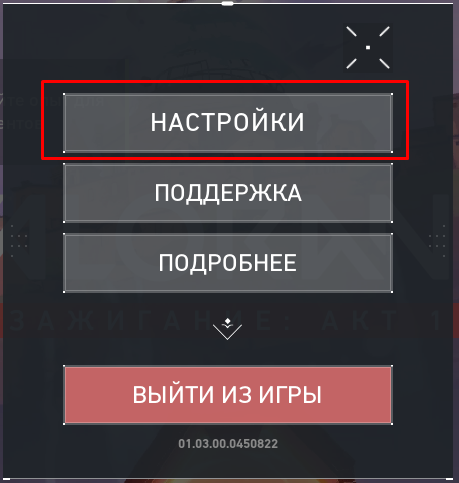
Open the Video menu, which has three subsections.
- IN "General" the main setting is "Permission" It is always recommended to choose the maximum value that matches the monitor resolution. Quality will be maximum, but FPS, on the contrary, is decreasing. Previously, all professional gamers set the minimum resolution to increase performance as much as possible. But with game updates, map drawing and the number of visual elements, textures, is becoming more and more numerous, and playing on minimum values becomes quite difficult. To the point that it is sometimes difficult to notice player models on the map. Therefore, it is better to choose the average resolution when everything is normally visible, and the drawdowns of the FPS are not so significant. Try to set the smallest resolution at which you don’t have to peer too hard to detect certain elements during the game. Although, as practice has shown (read the example below), the quality does not become too poor, as in the same CS:GO. Here we turn off all FPS restrictions. Then you can move on to optimizing the graphics.
- On menu "Graphics Quality" visual effects level is set. If you are not picky about the picture and need the highest performance that can be achieved through Valorant internal settings, then set minimum parameters. Quality will noticeably deteriorate, but FPS will rise to the highest possible level. The first three settings have a particularly strong impact on FPS and overall image visualization: material quality, texture quality and part quality. It is recommended to disable vertical synchronization, remove smoothing, reduce anisotropic filtering. All items also need to be experimented with.
- "Statistics" It is an important point that allows view FPS in Valorant right during the game, it is recommended to activate the meter display immediately to see how the FPS has changed when certain settings are changed, Text Only value will show the numeric frequency value in the upper left corner. "Graph Only" will show the real-time FPS change diagram from the right edge, but the numeric indicator will also be available.
NVIDIA graphics card settings
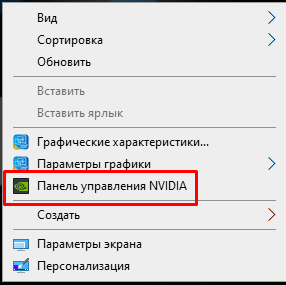
Right click on the desktop Open NVIDIA Control Panel
Go to Advanced 3 D Image Settings
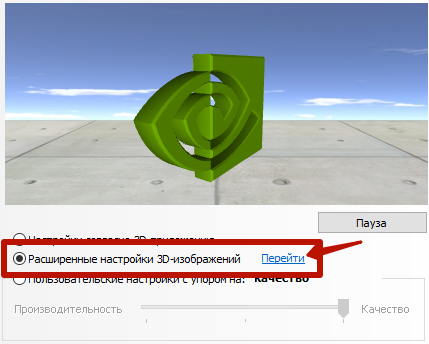
Open the Software Settings tab Select from the Valorant program list and specify the settings (example below).
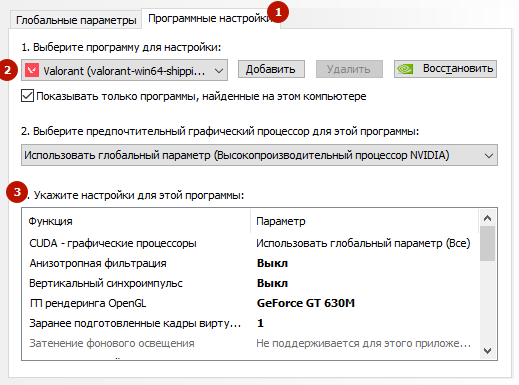
If Valorant is not listed, then add the game manually.

For the experiment, we set NVIDIA to maximum, that is, we turned off everything to achieve the highest FPS. You can repeat the settings from the screenshots below.
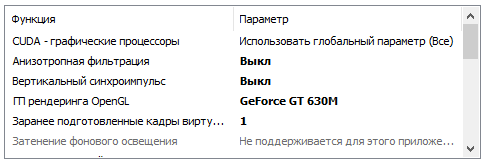
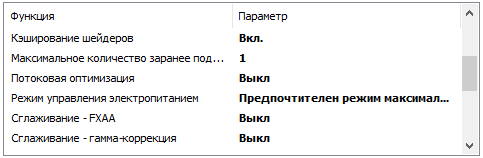
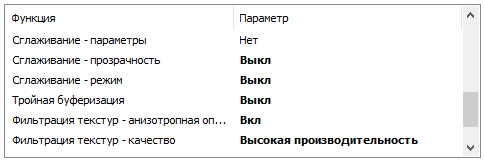
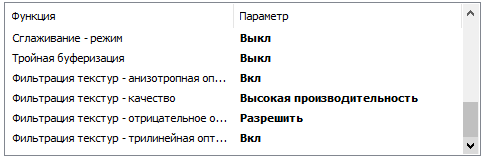
Settings can be set not only for a specific program, but also for the entire system (Global Options tab).
Setting up AMD Radeon
A real example of an increase in FPS
To verify the above information, a trial optimization of the game was made.
Test subject - eight-year-old HP Pavillion DV6 7052-SR laptop.
Configuration:
- OS - Windows 10 x86;
- RAM - 6 GB;
- CPU - Intel Core i5-3210M 2.5GHz;
- GPU - NVIDIA GeForce GT 630M 2Gb.
The original FPS at standard settings after installation of Valorant was in the region of 80-100 frames/sec.
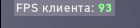
For the experiment, the resolution was reduced to the minimum possible. All quality parameters were reduced by a minimum.


After all the actions, it was possible to make an increase of about 50% to 150-160 FPS, which, in our opinion, is a very satisfactory result.

And after optimizing NVIDIA for the game Valorant, the FPS began to reach 190-200 frames.
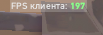
Despite the maximum detailing shutdown, the picture remained at a decent level, and the game became smooth and clear.
On a more or less normal computer, the FPS will be even larger and more stable. The laptop has been in active use for 8 years, including in other games, and the processor temperature in Valorant reaches almost 100 °C, which is a critical value. Thanks to a normal cooling system (compared to laptops) on desktop PCs, performance will be higher and more stable.
Additional recommendations
- Free up enough free disk space to play In the installed state, Valorant currently weighs approximately 8.5 GB. Considering that with future updates the weight will only increase, it is recommended to free up approximately twice as much free space, for example, 20 GB.
- Install the game on a SSD. It's much faster to run than a regular hard drive.
- Update all Windows components and GPU driver to the latest versions.
- With a weak processor and little RAM, disable all background programs, exit third-party applications that are not used during the game. For example, Internet browser, skype, antivirus and other software.
- Optimize and clean the system - Use the free version of the CCleaner cleaning program.
Video about FPS
We hope that the problem of the small FPS will no longer bother you. According to a similar principle, you can raise the FPS in other games.